
You have finally corralled everyone into the same room long enough to tackle the list. Someone unloads the dishwasher. Someone else hauls the recycling. Then a voice asks, “Can we play that thing?” Your instinct might say not now—we are in the middle of chores. Fair. But a short pause that still feels like part of the same playful home is not the same as opening a random app and disappearing for an hour. That is the difference between a breather and a distraction—and it is why Chorish treats its daily mini-games as part of the rhythm, not a detour from it.
When a pause is part of the plan
Chores are not a single marathon. They are a string of starts and stops: load the washer, wait; wipe the counter, move on. Brains—especially young ones—need a beat between those stops. A tiny game that lives next to the chore list gives everyone a shared exhale without asking anyone to leave the “we are doing this together” mindset. You are not pausing chores to chase something unrelated; you are closing one loop and opening a playful one before the next loop begins. That is pacing, not procrastination.
Five games, one fresh face each day
Chorish does not park a single game on the screen and call it done. Five mini-games rotate—Quick Quiz, Emoji Riddle, Memory Flip, Word Scramble, and Spot the Difference—so the break feels different from day to day. One afternoon might be a quick trivia hit; another might be a calm memory match. The point is not to master every game; it is to give the household a small, predictable reward that still feels like a surprise. You get variety without turning chore time into a lecture about “how to play.”
The leaderboard ties the breather to the group
Game scores roll into a game leaderboard—separate from who emptied the bins, but still part of the same playful energy. That matters: the pause is not a solo vanishing act. It is something you can laugh about together, compare lightly, and walk away from without a guilt trip. When the chore list is visible and the game scores are visible, the whole flow feels like one family rhythm: work, play, work—without pretending you are running a factory.
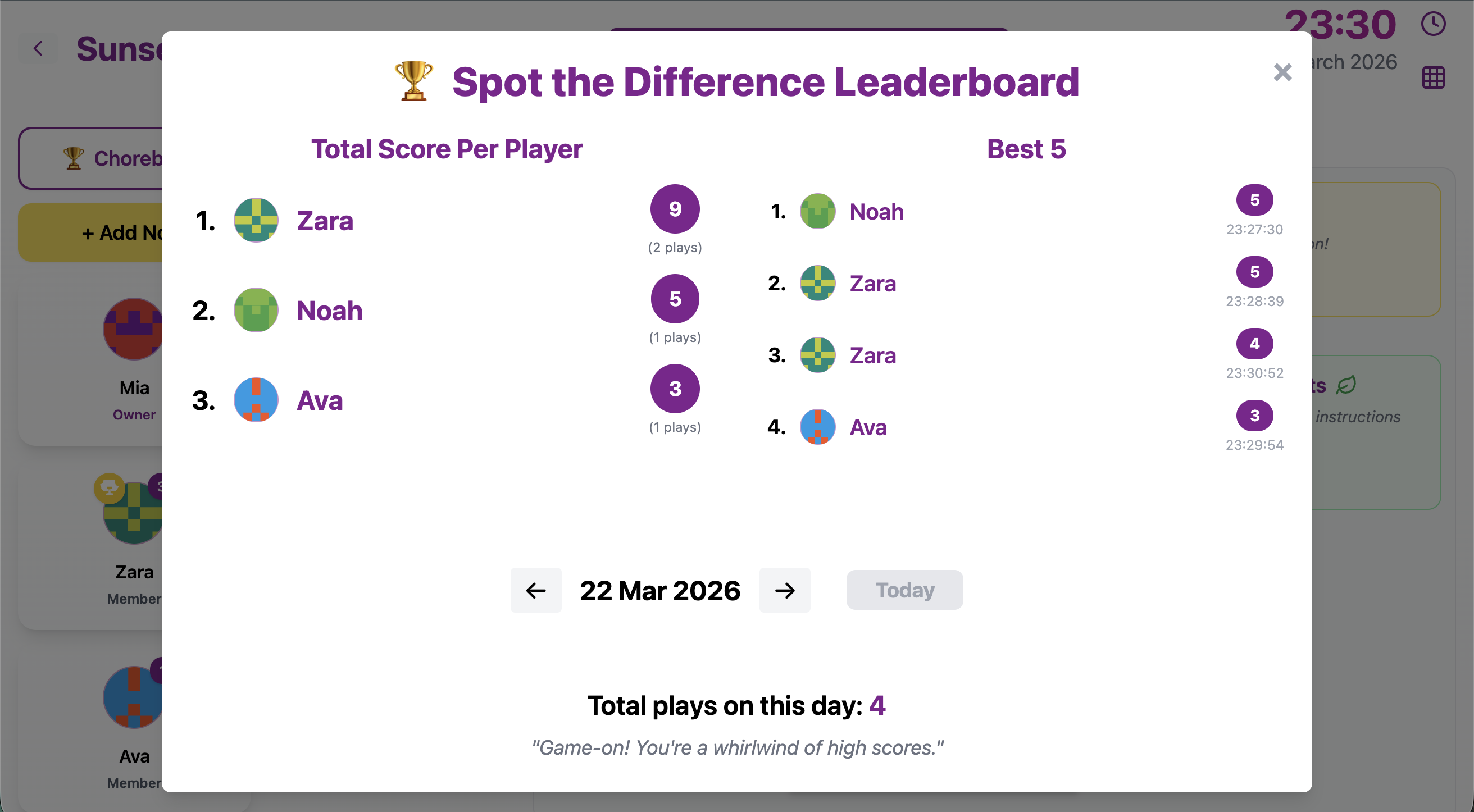
Game scores sit on their own board—same playful energy, still a group thing.
This post is about why, not how
This piece is here to answer one question: why those daily mini-games sit next to the chore list—not a step-by-step for each game. For a friendly overview of the full lineup and how Choreboard and games fit together, start with Chorish: fun and simple chore tracking for busy families. For more on the Choreboard and daily games in family life, see Why Chorish makes chores fun for the whole family and five ways to turn chore chaos into family fun.
No sign-up, kitchen-counter simple
Chorish is free and no sign-up—easy to open on a tablet on the counter where the list actually lives. Everyone gets an avatar, chores and notes share one dashboard, and you can switch to the Choreboard for friendly rankings when you want the scoreboard vibe. When you want a smile before the next job, the daily mini-game is there on purpose. Your household’s information stays on your devices, with privacy in mind.
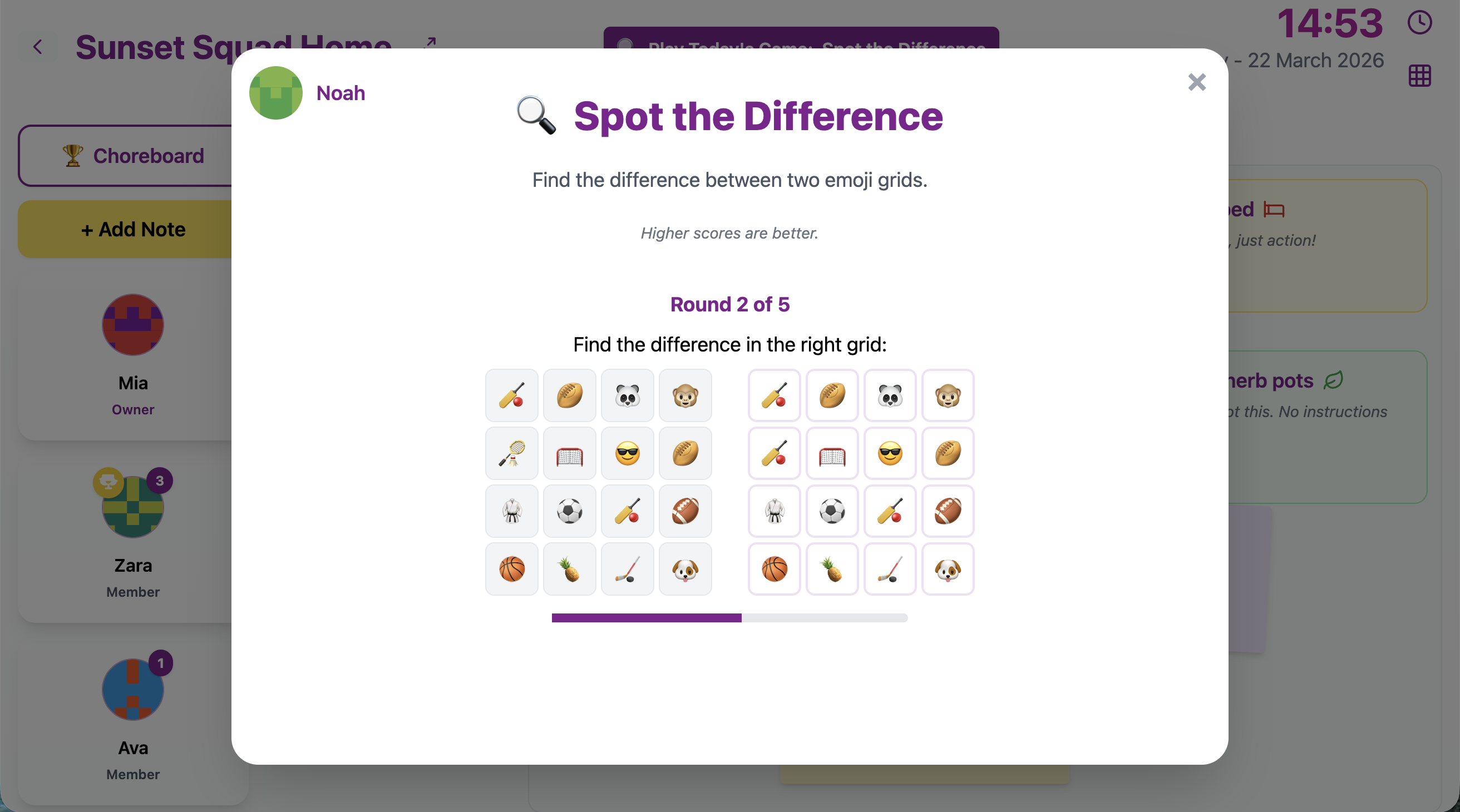
A quick round can cap a finished job so the afternoon does not feel like one endless list.
Visit Chorish.com and see whether your chore rhythm feels a little more human. Questions? See our FAQ.