Some days, everyone is indoors together and the house starts to feel like it is gently multiplying its own mess.
Shoes appear in unusual places. Cups migrate to every flat surface. A blanket becomes a fort, then a nest, then a mystery laundry item. Someone says they are bored exactly three seconds after ignoring a basket of clean socks that could use a small amount of teamwork.
Indoor days can be lovely. They can also make household chores harder to ignore because the evidence is right there, usually on the sofa.
The trick is not to create a giant list and announce a grand cleaning campaign. That is how you accidentally start a family uprising with a dustpan. A better approach is to keep indoor chores small, visible, and easy to choose from. When everyone can see the list, it feels less like one person nagging and more like the household gently resetting itself.
Here are practical indoor chore ideas for families, roommates, and shared homes, plus a simple way to make the whole list visible so people can actually pitch in.
Why indoor chores need to be visible
Indoor chores often happen in shared spaces: kitchens, living rooms, hallways, bathrooms, bedrooms, and entryways. That means one person’s mess can quickly become everyone’s background scenery.
The problem is that people do not always notice the same things. One adult may see crumbs, laundry, cups, and a bin that is one banana peel away from rebellion. A child may see a perfectly acceptable floor with toys arranged in what they consider “active use.” A roommate may see the sink and assume someone else has it covered.
Visibility helps because it turns vague household frustration into clear next steps.
Instead of saying:
- “This place is a mess.”
- “Nobody helps around here.”
- “Can everyone just do something?”
Try making the list visible enough that people can choose a specific job:
- “Pick one kitchen reset job.”
- “Choose a two-minute living room chore.”
- “Check the board before the next game.”
- “The hallway has three quick jobs left.”
That small shift makes chores easier to start. It also reduces the need for one person to hold the entire household checklist in their head, which is a surprisingly exhausting place to store shoe-related information.
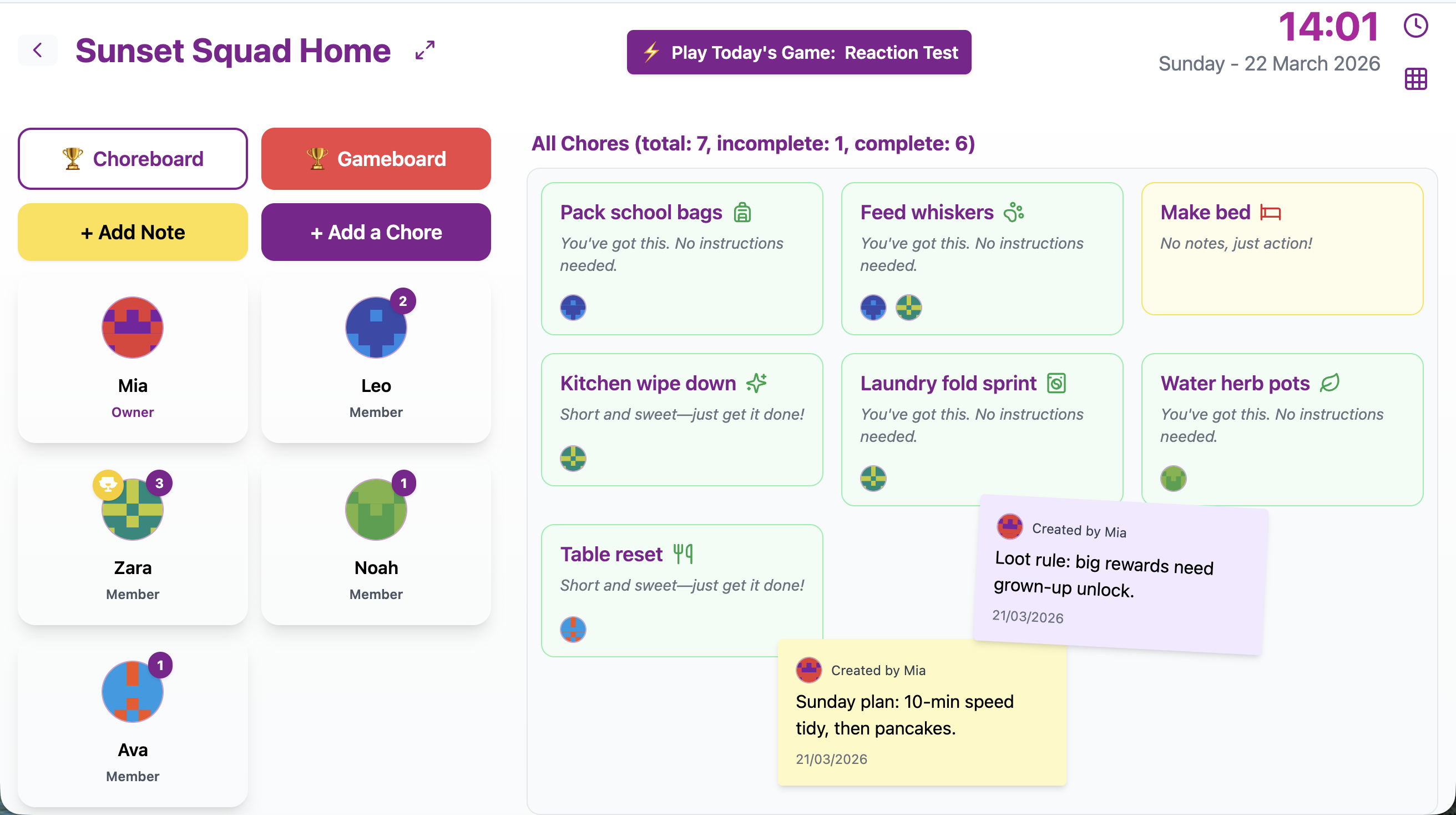
A shared dashboard keeps indoor chores visible in the place where family life is already happening.
Indoor chore ideas by room
You do not need every chore on the list every day. Think of this as a menu. Choose the tasks that fit your household, the ages involved, and the amount of energy available.
Kitchen chores
The kitchen is often where indoor mess builds up fastest. Small jobs here make a big difference because everyone tends to pass through the space repeatedly.
Good kitchen chores include:
- Clear plates after meals.
- Put cups and mugs by the sink or into the dishwasher.
- Wipe the table after breakfast, snacks, or dinner.
- Put dry dishes away.
- Match lids to containers, if your container cupboard has not become a puzzle dungeon.
- Empty lunchboxes.
- Sort recycling into the right place.
- Sweep visible crumbs from the floor.
- Refill a pet water bowl with adult guidance where needed.
- Check whether the fruit bowl needs tidying.
For younger children, keep kitchen chores simple and supervised. “Put your plate by the sink” is enough. Older kids can handle more steps, such as clearing the table or loading safe dishwasher items.
If you are not sure what fits each age, pair this list with our guide to age-appropriate chores for kids.
Living room chores
Living rooms collect evidence of family life: cushions, books, blankets, toys, snack bowls, craft supplies, socks that apparently came here independently.
Useful living room chores include:
- Put cushions back on the sofa.
- Fold or stack blankets.
- Return books to shelves.
- Put toys in baskets or boxes.
- Move cups and plates to the kitchen.
- Clear the coffee table.
- Put remote controls in one agreed place.
- Wipe a low table with help if needed.
- Gather stray socks or jumpers into a laundry basket.
- Reset a game, puzzle, or craft area after use.
Living room chores work well as “one-song resets.” Play one song, choose two or three jobs, and stop when the song ends. The time limit keeps the task from feeling endless.
Hallway and entryway chores
The entryway is often the first place to collapse when everyone is home. Shoes, bags, coats, umbrellas, sports kit, and school items can form a small indoor mountain range by lunchtime.
Try these:
- Put shoes in pairs.
- Hang coats or place them on hooks.
- Put bags in their usual spot.
- Move wet umbrellas or boots where they can dry.
- Gather hats, gloves, or scarves into a basket.
- Clear letters, leaflets, or school forms from the floor.
- Return keys to their usual place.
- Check that tomorrow’s bags are not blocking the doorway.
These chores are especially useful because they make leaving the house easier later. Future-you deserves fewer shoe hunts.
Bathroom chores
Bathroom chores should be age-appropriate and safe. Keep products and cleaning chemicals handled by adults or older children only when appropriate.
Simple bathroom jobs include:
- Hang towels back up.
- Put dirty clothes in the laundry basket.
- Replace an empty toilet roll.
- Put bath toys in a container.
- Wipe toothpaste from the sink with a damp cloth.
- Put hairbrushes or toiletries back in their place.
- Check whether hand towels need replacing.
- Empty a small bin with help if needed.
For younger kids, “hang your towel” is a perfectly good bathroom chore. It is visible, repeatable, and easy to know when it is done.
Bedroom chores
Bedrooms can feel too big to tackle if the instruction is simply “clean your room.” That phrase has defeated many brave people.
Break bedroom chores into smaller jobs:
- Put dirty clothes in the basket.
- Put clean clothes in a drawer.
- Place books on a shelf.
- Put toys in one container.
- Make the bed in a simple way.
- Clear the floor near the door.
- Put rubbish in the bin.
- Place school items or work items in one spot.
- Return cups or plates to the kitchen.
If a bedroom is very messy, choose one category, not the whole room. “Find all the clothes” is clearer than “sort this out,” and far less likely to produce dramatic floor flopping.
Indoor chore ideas by energy level
Some days the household has energy. Other days everyone is tired, overstimulated, or moving through the home like sleepy penguins. A useful chore list should have options for both.
| Energy level | Chore examples |
|---|---|
| Very low energy | Put one cup in the kitchen, hang one towel, put shoes together |
| Two-minute reset | Clear a table, gather laundry, put toys in one basket |
| Medium effort | Sweep crumbs, empty lunchboxes, fold blankets, sort recycling |
| Bigger indoor job | Reset the entryway, tidy a bedroom zone, clean a shared surface |
This matters because all-or-nothing systems break quickly. If the only choices are “do nothing” or “deep clean the whole house,” many people will choose the option involving snacks and denial.
Tiny chores still count. They keep momentum alive and help the house feel less stuck.
Make the list easy to choose from
A good indoor chore list should answer three questions quickly:
- What needs doing?
- Who can do it?
- How will we know it is done?
You can make that happen with a paper list, whiteboard, shared tablet, or a chore tracker. The format matters less than the visibility.
Try grouping chores by room or by effort:
- Kitchen quick wins: clear plates, wipe table, sort recycling.
- Living room reset: cushions, blankets, cups, toys.
- Hallway help: shoes, coats, bags.
- Bedroom basics: laundry, books, floor space.
- Bathroom basics: towels, bath toys, sink wipe.
If you use Chorish, you can keep household chores visible on a shared dashboard, let people tap their avatar, and mark jobs complete. The Choreboard then gives everyone a simple view of progress without requiring a parent, partner, or roommate to keep a secret mental spreadsheet.
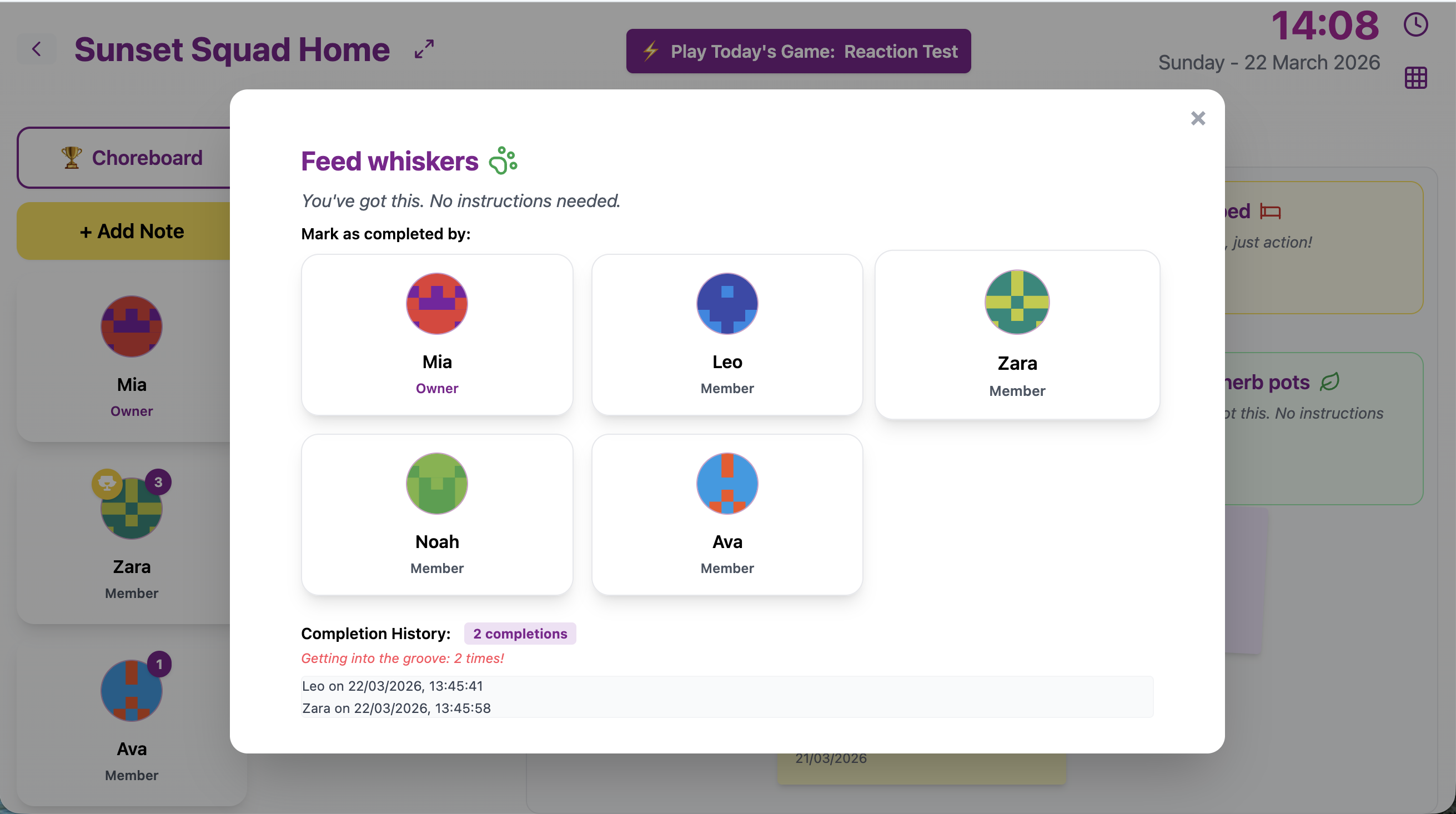
Clear, tappable chores make it easier for someone to choose a job and finish it.
For more on the value of visible lists, see making chores visible without nagging. The short version: if people can see the list, you do not have to be the list.
Use the Choreboard as a gentle progress check
Indoor chores can feel repetitive, especially when everyone is inside for a long stretch. A shared progress view can add a bit of momentum.
The key word is gentle.
A Choreboard, sticker chart, or whiteboard should show effort, not rank family members as if the living room is hosting a televised competition. Friendly feedback can help:
- “Nice, the kitchen is nearly reset.”
- “Looks like three people have pitched in.”
- “One more quick job and we can take a break.”
- “The hallway is winning against the shoe pile.”
Try to avoid turning the board into pressure:
- “Why have you done less?”
- “You are losing.”
- “Your brother is better at this.”
Competition works best when it stays playful. The gold medal, the checkmark, or the top spot should feel like a cheerful nudge, not a household verdict.
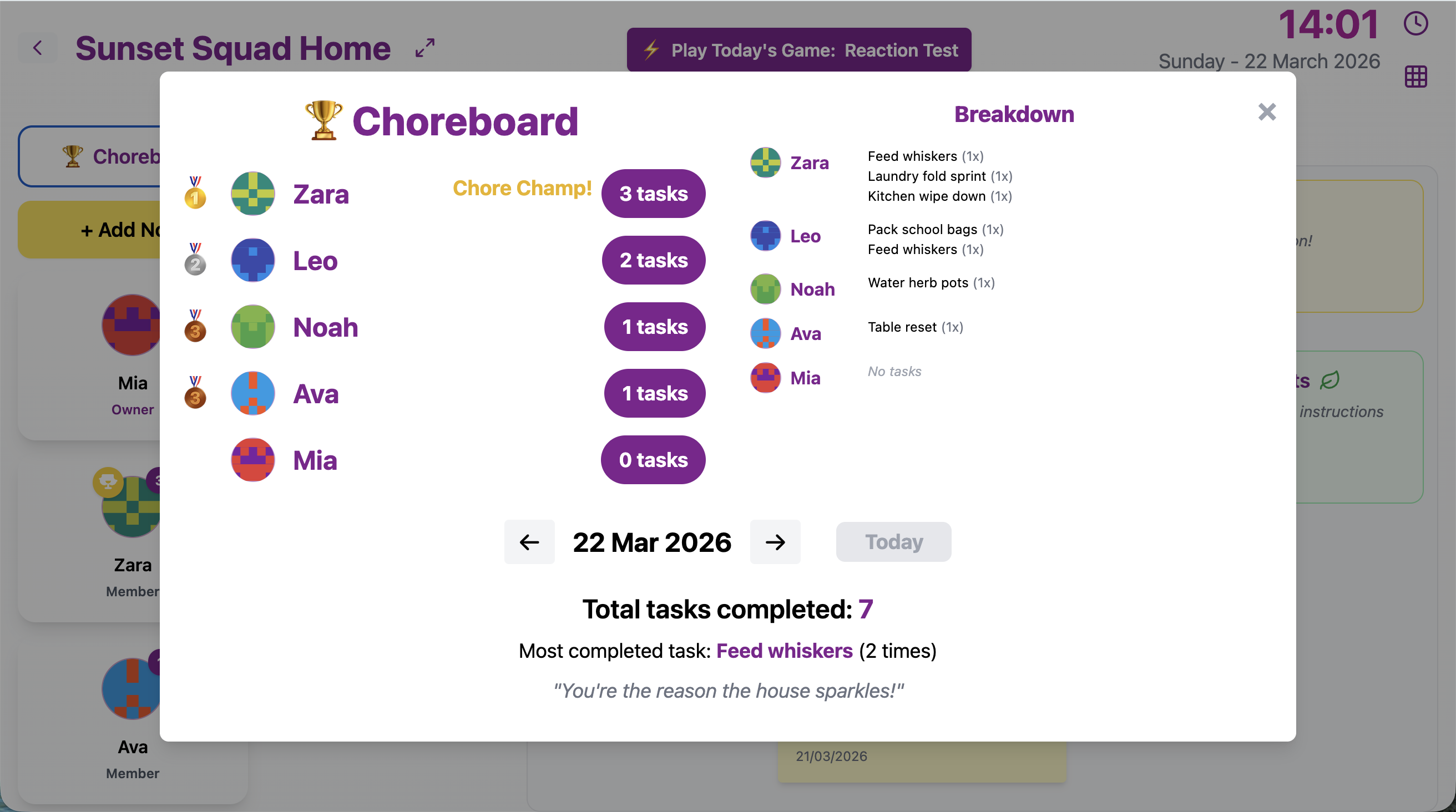
A shared Choreboard can make indoor progress visible without turning chores into a lecture.
If you want a deeper comparison, our post on chore charts vs. a live scoreboard explains why a live view can be more motivating than a list that quietly becomes fridge wallpaper.
Add a quick game after a reset
Indoor days can drag if the whole rhythm is “mess, reminder, chore, repeat.” A short game after a small reset can make the routine feel lighter.
Use games as a finish-line treat, not a bribe for every single task:
- Pick a short indoor reset.
- Everyone chooses one small job.
- Mark the jobs complete.
- Play one quick game or take a short break.
- Move on with the day.
Chorish includes rotating daily games such as Quick Quiz, Emoji Riddle, Memory Flip, Word Scramble, and Spot the Difference. They can work nicely after a chore burst because they are quick, shared, and still connected to the household dashboard.
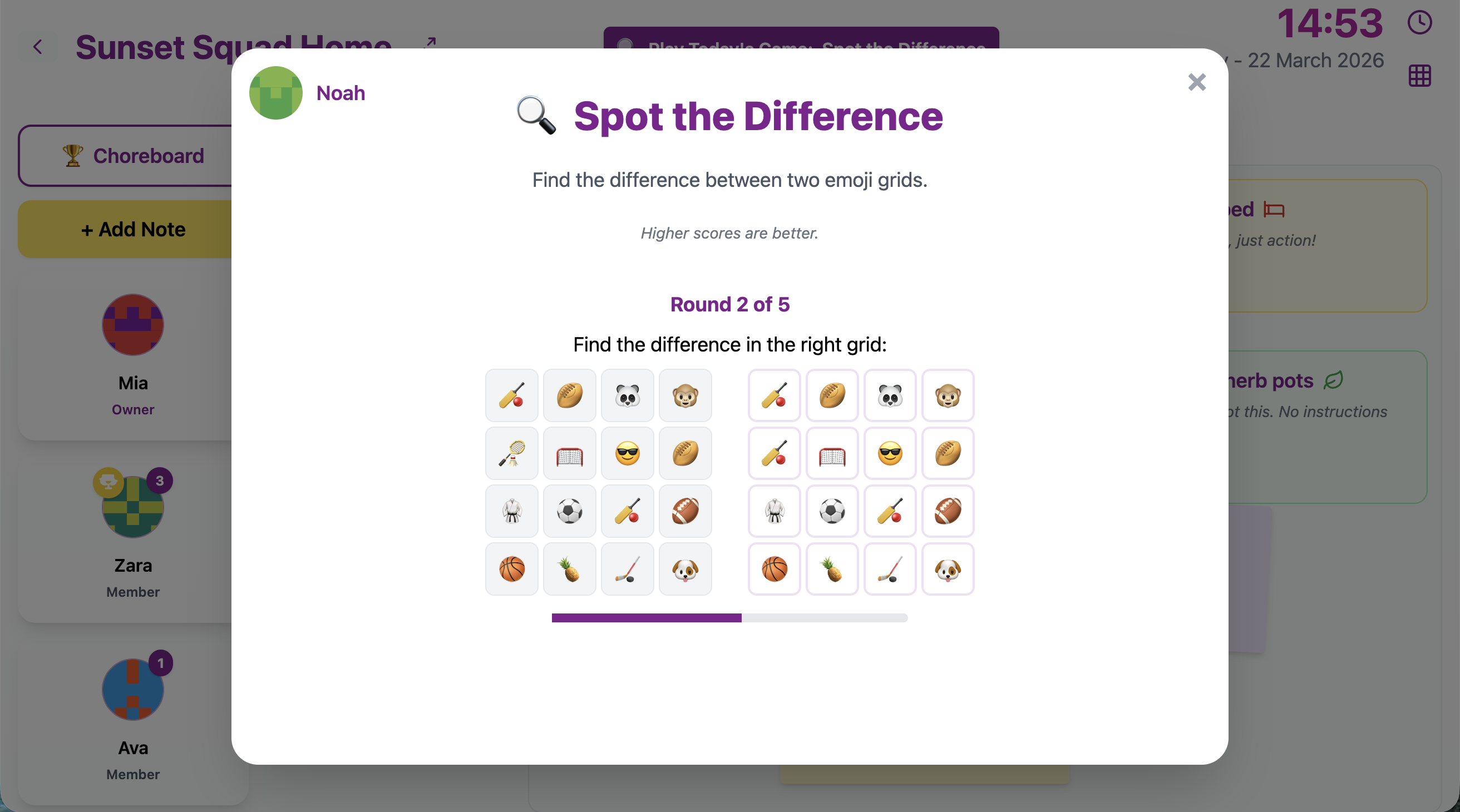
A quick game can give indoor chore time a small breather before everyone moves on.
For more detail on the game side, see why a quick game after a chore is a break, not a distraction.
A simple indoor chore plan for the next time everyone is home
Here is a no-drama plan you can use on any indoor day, whether it is rainy, hot, snowy, windy, or simply one of those weekends where nobody seems to leave the kitchen.
- Choose three shared spaces: kitchen, living room, hallway.
- Pick three tiny chores for each space.
- Put the list somewhere everyone can see it.
- Let each person choose one job.
- Mark completed chores immediately.
- Take a short break or play a quick game.
- Repeat once later if needed.
That is enough. You are not trying to run a hotel. You are helping the home breathe a little.
If your family is newer to chore routines, keep the first round very easy. Clearing plates, pairing shoes, and putting blankets back can be a perfectly respectable start. The habit grows when people experience chores as doable.
Keep indoor chores kind, clear, and visible
Indoor chore ideas work best when they are practical enough for real life. The list should not require heroic motivation, a color-coded binder, or a family meeting with handouts.
Start with the rooms that create the most daily friction. Break vague chores into finishable actions. Put the list where everyone can see it. Notice progress quickly. Add a small playful break when it helps.
Whether you use a fridge list, a whiteboard, or a shared dashboard like Chorish, the goal is the same: make household help easier to spot and easier to start.
Questions about Chorish, privacy, or getting started are covered in the FAQ. And if your indoor chore list keeps turning into a reminder loop, pair this guide with how to introduce chores without a family fight and give everyone a smaller, clearer first step.